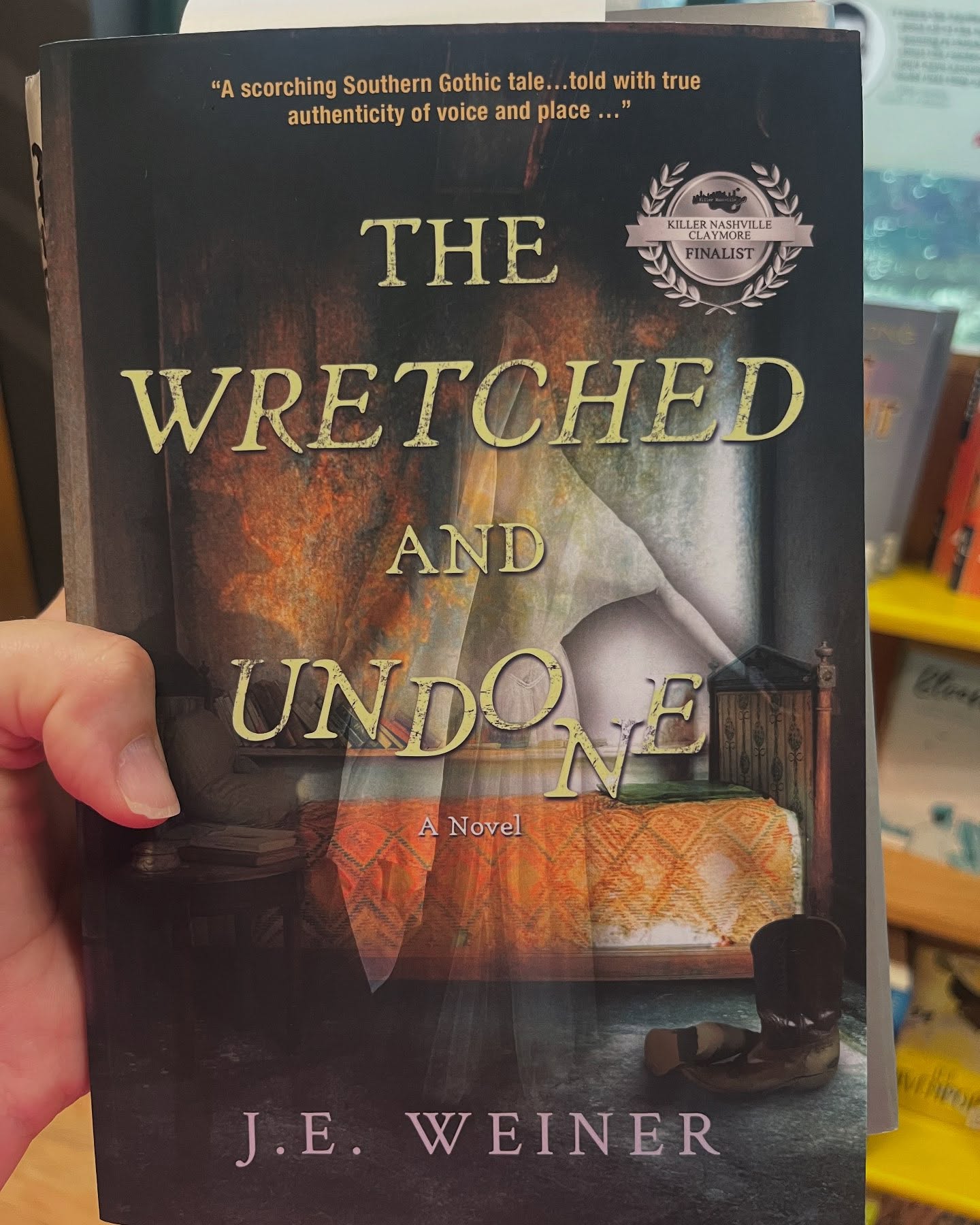
Three Stars for ‘The Wretched and Undone’ by J.E. Weiner

Summed Up: Spanning generations from the Civil War through the 1940s, this sweeping saga follows a sprawling family tree entangled in tragedy. Dozens of interconnected lives unravel through wave after wave of misfortune—brief moments of light dimmed by relentless darkness. At the heart of it all lurks a malevolent force, vengeful and unseen, pulling the strings from the shadows. Spooooooky stuff, eh? Well…sort of.

What’s Missing: After an unforgettable book talk with the author—joined by her fiddlin’ and friends from the Dixie Chicks (cousins, maybe?)—I was all in on the Southern Gothic allure: ghosts, legends, and that thick, haunted humidity of lore. But the malevolent shadow lurking in the woods? It felt more like a footnote than a threat. The dark presence made only a handful of fleeting appearances, easy to forget amid the ceaseless stream of sorrows. And when it did show up, it slipped away just as fast—like a mosquito you swat without thinking, while trying to enjoy a cold Shiner on the porch swing.

What I Liked: While the book is short on ghosts, it is heavy on atmosphere and intrigue. I wasn’t too keen on most of the highly flawed characters (particularly the milquetoast women), and oh—don’t even get me started on Luke and his father, who apparently embraced the “gentle parenting” trend way back in the day. Yet despite all that, I was heavily invested in their stories and anxiously watched the impending trainwreck unfold. Most of all, I loved the descriptions of historic Bandera, my favorite vacation spot in all of Texas! There’s even a group of characters from Pipe Creek—a tiny spot near Boerne where my husband and I stay at least twice a year.

Thoughts on the Characters: In this sprawling, multi-generational saga, you’ll encounter a whole cast of characters grappling with more than their fair share of… personal challenges. Unfortunately, the women in this tale feel shortchanged. Many come across as one-dimensional, lacking the grit, depth, and moral backbone you’d expect—even hope for. Sure, the setting nods to a time when women were often sidelined in favor of their rugged, boot-stompin’ cowboy counterparts—but history’s full of exceptions. It would’ve been nice to have at least one kick-ass woman fighting the forces of evil, but oh well.

The Pacing: Grab your Dramamine because the choppiness might make you seasick! Just when I get hit with a wallop of sadness, the next chapter picks up at another time and place. I don’t get to process the tragedy that just happened because the author has already moved on to the next unfortunate event. My unsolicited advice is to take it down a notch and pay homage to the beloved character you just knocked off. I know readers have short attention spans, but dang! Give this girl a chance to grieve!

Overall: Despite my grievances, I would be lying if I said this wasn’t an interesting story. It was worth every penny of the $20 I forked over for a paperback, and I certainly will read another book by this new author. This was a big undertaking for a debut novel, so I give her props for pulling it off. I just hope she can give us some better characters in her next novel.

31 Books of Halloween: When Ghosts Call Us Home

Number six on my 31 Books of Halloween countdown (yikes—I have some catching up to do!), is a total dud that I should’ve DNFed: When Ghosts Call Us Home). Yowza—this was a real turkey, which is such a disappointment because the premise checks all the boxes: A haunted sea cliff mansion; a viral found footage movie; and a haunted girl searching for clues to her missing sister whilst starring in the second installment of the ill-fated viral movie. There’s so much to unpack here, so let’s get cracking:

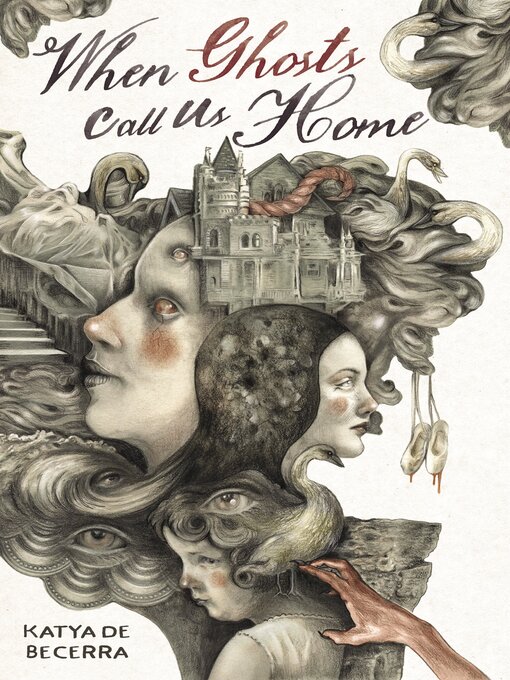
What I liked: The cover art is stunning! It’s so beautiful and creepy with elements of the story—ballet shoes, ocean waves, haunted houses—woven in. Chef’s kiss to the artist.

The scares: It’s weird. Even though all the horror elements were there (evil demon, possession, ghostly masquerade balls, etc.), this book was anything but scary. This book is 95% inner monologue, and I just grew tired of being inside Sophie’s head. Every page is packed with repetitive emotional descriptions of fear and dread, causing my eyes to glaze over. I get the feeling this author was trying to channel Eleanor from The Haunting of Hill House, yet the execution was all wrong.

The main character: While trudging through this thing, I realized that I need to veer away from mopey teenage characters. We are inside Sophie’s head the entire time—and it’s a total downer, man. There’s very little dialogue, so the periphery characters are barely even one-dimensional. There’s nothing to like about Sophie, other than her steadfast quest to find her missing sister. But even then, I ask why? The missing sister, Layla, put her through hell while filming her notorious movie, which makes me wonder why we should care about her salvation?

The viral film: I’m having a VERY hard time believing that a teenage kid could have the wherewithal to create a hit film with no background in filmmaking whatsoever. I mean…there’s special effects, crazy horror movie angles, epic dance scenes. How is any of this remotely believable? Also, we get no information about how she filmed, edited, and distributed this thing all by her little self. I get that demonic forces are at work here, but do they have skills in Final Cut Pro? And then the “V-Head” cult following was just absurd. Adding to the ridiculousness is some sort of dark website that challenges users to follow “The Path” to find the missing sister (insert eye roll emoji here).

Overall: I’d complain about wanting my money back, but I read this thing for free thanks to my best friend, Libby! Despite its alluring premise, the pacing is slow and drab. A lot of action is packed into the ending like the author needed to rush through it to meet a deadline. I didn’t understand how everything was resolved so quickly, but to be honest, I was just relieved it was over. Yeesh.

31 Books of Halloween: ‘Frozen Charlottes’ by Alex Bell

I saw this book featured on BookTube and knew I just had to read it! I mean how could you go wrong with ghostly dolls, a haunted English estate, and a Ouija game gone bad? Here are my thoughts:

The gist: After an ill-fated Ouija game (there’s an app for that!), Sophie goes off to stay with her uncle and cousins in a secluded estate that once served as a boarding school for girls. Sadly, the aunt is unavailable because she’s in a mental health facility! Spooky things happen when creepy dolls whisper to themselves and things go bump in the night!

The scares: For a YA book, this is pretty darn scary! When I got to the part where the dolls–the Frozen Charlottes–started whispering bad things to each other, I had to look over my shoulder a few times just to be sure I was truly alone. I love that the story is set on an island shrouded by fog and mystery–such fun! Then there’s the parrot, Dark Tom, who randomly screeches and rants about murder and mayhem. Yikes!

The mystery: I’ll admit, I saw the twist coming a little early on, but that didn’t detract from the suspense, especially when the evildoer started to spiral. This book has some intense body horror scenes involving eyeballs and needles. After reading this, I’m going to stay far, far away from porcelain dolls.

Overall: This is an atmospheric ghost story that’s just perfect for spooky season. I loved the ending, which hinted at another installment in the series. We haven’t seen the last of these mischievous, murderous frozen Charlottes!

A Q&A with Suzanne Harper, Author of ‘Fun and Frothy’ Books for Teens

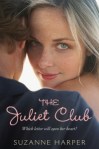
As a contributing writer for ShelfLife@Texas, UT-Austin’s book blog site, I had the privilege of interviewing an up-and-coming young adult writer. If you’re a fan of Meg Cabot or Anne Brashares, you’ll love Suzanne Harper’s fun and frothy novels, “The Secret Life of Sparrow Delaney” (Harper Collins, 2008) and “The Juliet Club” (Harper Collins, 2008). [This blog is re-purposed from ShelfLife@Texas].

Did you set out to write fiction for young adults?

All through college and graduate school and many writing courses after that, I really wanted to write mysteries for the adult market, although I kept reading children’s books during that time simply because I enjoyed them so much. Then I started working at Disney Adventure magazine, which led me to learn more about children’s books and children’s publishing. Also during that time, the YA market started booming, so I found myself reading more books aimed at teens. Then one day I was doodling in my journal and found myself writing a sentence that would eventually become the first line of “The Secret Life of Sparrow Delaney” (“It’s three minutes past midnight and the dead won’t leave me alone”). As I kept writing, the voice of my main character came through loud and clear – and she was definitely a teenager! I started writing my first YA novel and found that it was great fun.

When you were a teen, what kind of books did you like to read?

I liked epic historical novels, gothic romance novels, comedic novels, mysteries, spy novels, fantasy and science fiction to some degree….really, almost anything except moody books about mid-life crises (which I still avoid at all costs).

How do keep fresh when it comes to writing teen dialogue?

I don’t try to mimic teen speech as such. For one thing, slang dates a book really quickly. And for another thing, I think that if I were consciously trying to write teen dialogue – as opposed to trying to write good dialogue – I would quickly go off the rails. (I’ve read a few teen reviews online that complain that no teens actually talk like my characters, which is probably true. If anything, I guess I try to write idealized teen dialogue)!

In “The Juliet Club,” six friends are bonded by an organization called “the Juliet Club,” in which they answer letters sent to Juliet by those seeking advice on matters of the heart. What is the significance of the Shakespearean classic “Romeo and Juliet,” and why did you choose it to frame your story?

I read about the real-life Juliet Club, which is based in Verona, Italy, in an airline magazine. The club has dozens of volunteers who respond to letters from around the world, sent by people asking for advice from Juliet. (By the way, there is a nonfiction book about the history of the Juliet Club, which is the basis of the upcoming movie, “Letters to Juliet.”) I thought that the concept of the Juliet Club was a great setup for a YA novel, since Romeo and Juliet were teens and most teens first encounter Shakespeare through Romeo and Juliet.

Having said that, the main plot is really based on “Much Ado About Nothing.” It’s one of my favorite plays and it was great fun to re-visit it and echo certain scenes in the novel.

I also had a lot of fun researching the book. I visited Verona twice, took Italian lessons, and had tutors teach me a tiny bit about stage sword fighting and Elizabethan dance in order to write the scenes where my characters have to learn both those skills.

What message about love do you want the reader to walk away with?

That it’s a good idea to entertain the possibility that love will appear in disguise! In the novel, Giacomo thinks Kate is too studious and she thinks he’s too much of a flirt (actually, they’re both right, but they still fall in love). Silvia thinks Tom is awkward and gauche and Lucy doesn’t even notice Benno until almost the end of the book.

The other message is that love (and perhaps Shakespeare– or maybe both!) can transform people. Kate learns to flirt, Giacomo truly falls in love for the first time, Silvia softens a bit, Tom finds courage to declare his love, and so on. (And let’s not forget Kate’s father and Giacomo’s mother, who overcome a bitter academic rivalry to find romance).

In “The Secret Life of Sparrow Delaney,” the protagonist is a teenage medium who tries desperately to be “normal.” How do you think your readers can identify with Sparrow?

I think the desire to be normal and fit in is a classic teen wish, mainly because almost every teenager (even the popular, “normal” ones) secretly feel that they’re weird and abnormal. Also, teens are very self-conscious about being teased or seen as different, so most of them can identify with the fear of being mocked because their family talks to ghosts (even if their family doesn’t).

Paranormal young adult novels have become a huge hit among teenage girls. Why do you think young readers are so enthralled by things that go bump in the night?

Teens have always been fascinated with death and the possibility of an afterlife. I think it’s because they’re still relatively close to that shocking moment in childhood when you first realize that people you love — and eventually you — will die. It’s a subject that fascinates and scares them in equal measure, and they like reading books that address those issues.

Can you give us a glimpse into what you’re working on now?

I’m working on a middle grade series, which again involves the paranormal (and is set in Austin). I also have another YA novel in progress that is set in an alternate version of 18th century England and involves a troupe of traveling players.

About the Author: Harper has written three original novels based on the “Hannah Montana” TV series and a number of novels (under the pen name N. B. Grace) based on “High School Musical.” Her nonfiction books include “Boitano’s Edge: Inside the Real World of Figure Skating” (with Olympic gold medalist Brian Boitano), “The Real Spy’s Guide to Becoming a Spy” (with Peter Earnest, executive director of the International Spy Museum), “Terrorists, Tornadoes and Tsunamis: How to Prepare for Life’s Danger Zones” (with Lt. Col. John C. Orndorff), and “Hands On! 33 More Things Every Girl Should Know: Skills for Living Your Life from 33 Extraordinary Women.” Visit her Web site for more about her works.